
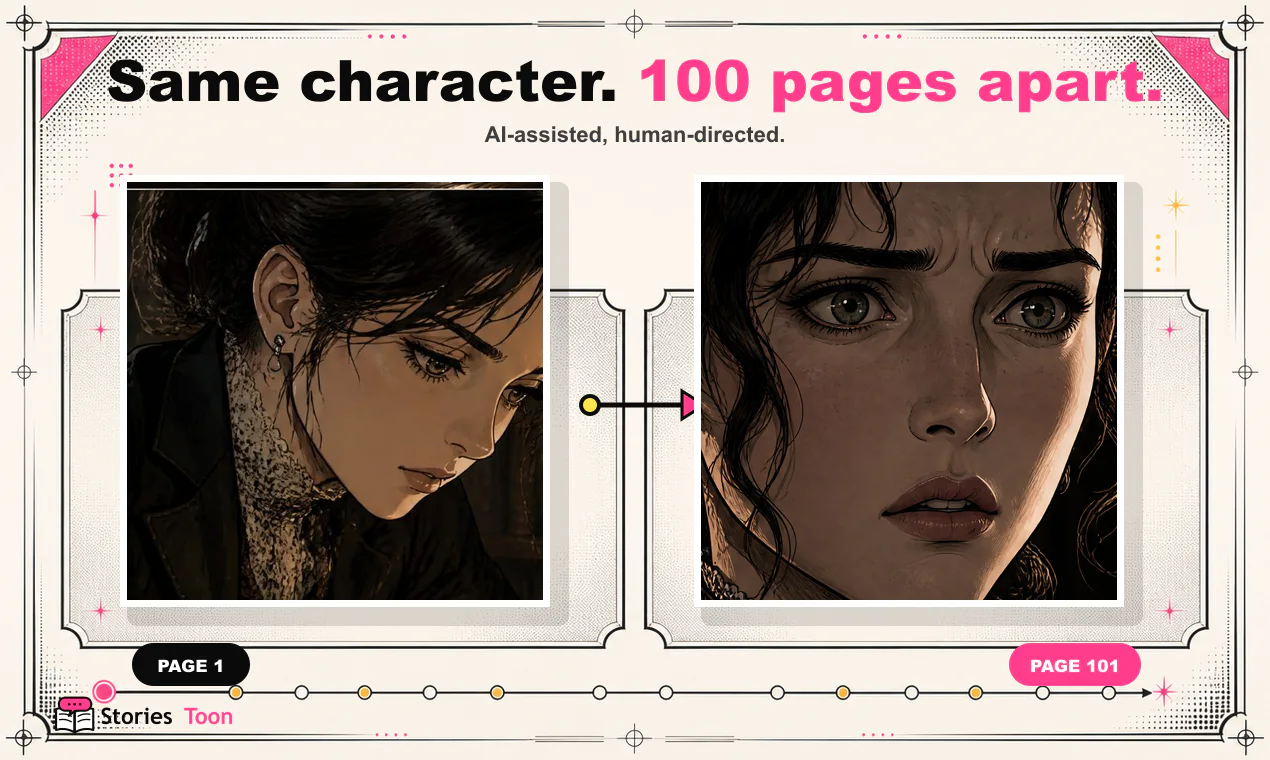
Crimson Vow is an ongoing English gothic comic adapted from a serialized novel. The project has reached 102 finished pages across six chapter segments and will continue beyond this milestone. That makes it useful for judging something a single impressive image cannot prove: whether readers can still recognize the cast after the story has moved through new rooms, costumes, emotions, and supporting characters.
Readers can enter the same story through the official Crimson Vow novel or follow the comic as it is released in installments on WEBTOON CANVAS. The 102 pages discussed here mark the current reviewed comic milestone, not the final length of the series or the number of pages already public on WEBTOON.
Consistency means recognition, not duplication
A serialized character should not look frozen. Expressions change. Hair moves. Clothing reacts to the scene. Camera distance, lighting, and rendering detail also change from page to page. The real test is simpler: when the character returns, does the reader know who they are before reading the name?
For Mina, the strongest anchors are her dark pinned hair, loose curls around the face, fine features, restrained Victorian clothing, and alert, scholarly presence. Those traits survive even when the scene moves from a quiet library to a crowded dinner and, much later, a tense hallway.
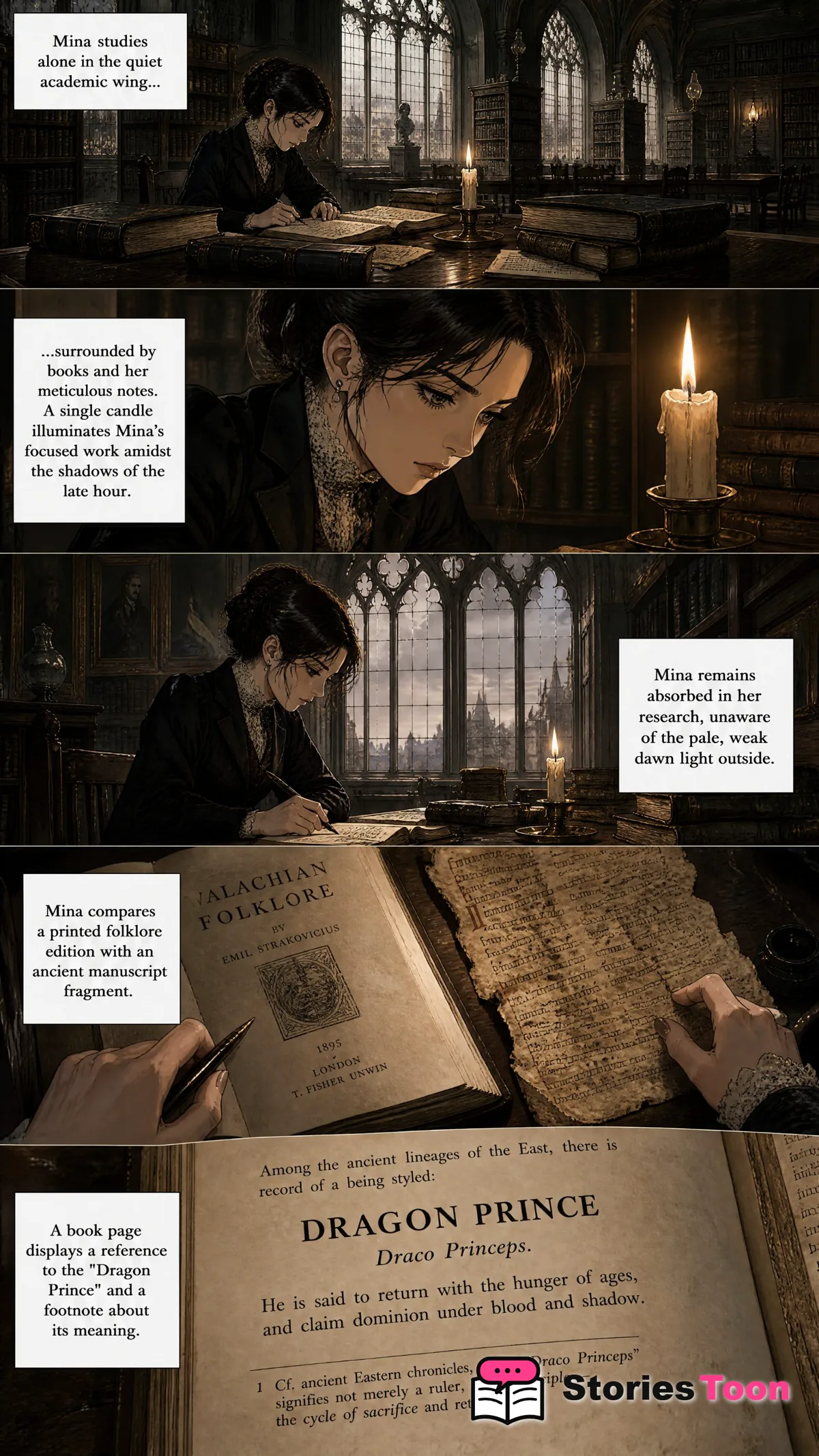
Mina begins as a focused scholar in black Victorian dress, surrounded by books, notes, and candlelight.
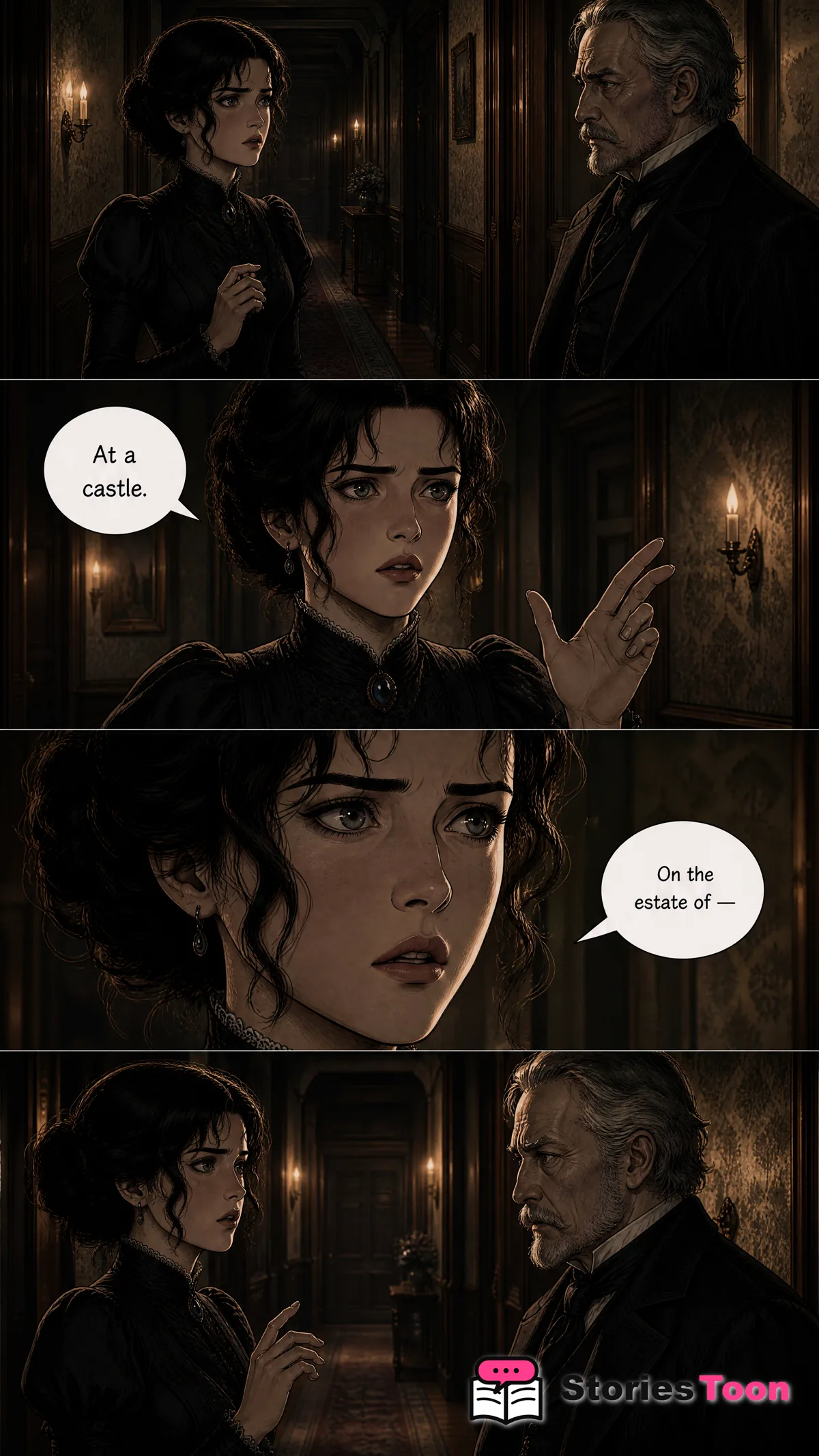
The expression and setting have changed, but Mina's face, hair, silhouette, clothing, and period identity remain readable.
Start with a small set of identity anchors
Long comics become easier to review when each recurring character has a short, visible identity checklist. We focus on the details a reader notices first: facial structure, hair shape and color, age, body silhouette, signature clothing, and one or two recurring accessories.
The list should be specific enough to catch drift but not so rigid that every panel becomes the same portrait. Mina can look worried, confident, tired, or startled. She can appear in profile or at a distance. The identity anchors stay while the performance changes.
Review continuity at chapter boundaries
A 102-page comic is too large to judge only at the end. We review it in manageable story segments. At the start of each new chapter, the returning cast is compared with earlier appearances before the story moves forward.
This catches the most distracting problems early: a face becoming noticeably younger, a hairstyle changing without a story reason, a costume losing its period, or two supporting characters becoming difficult to tell apart.
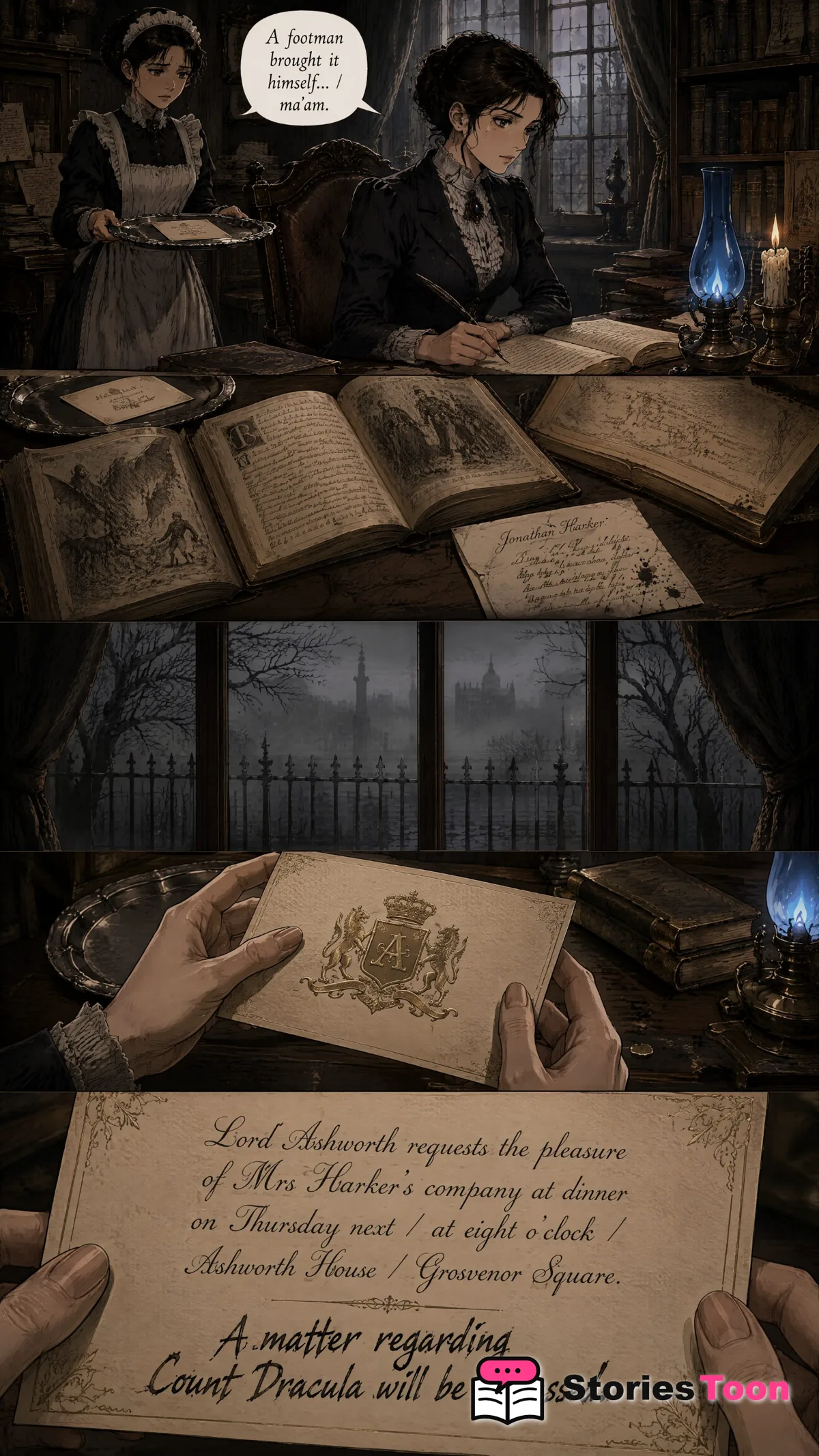
The library, writing desk, dark dress, pinned hair, and composed posture reconnect Mina with her opening scene.
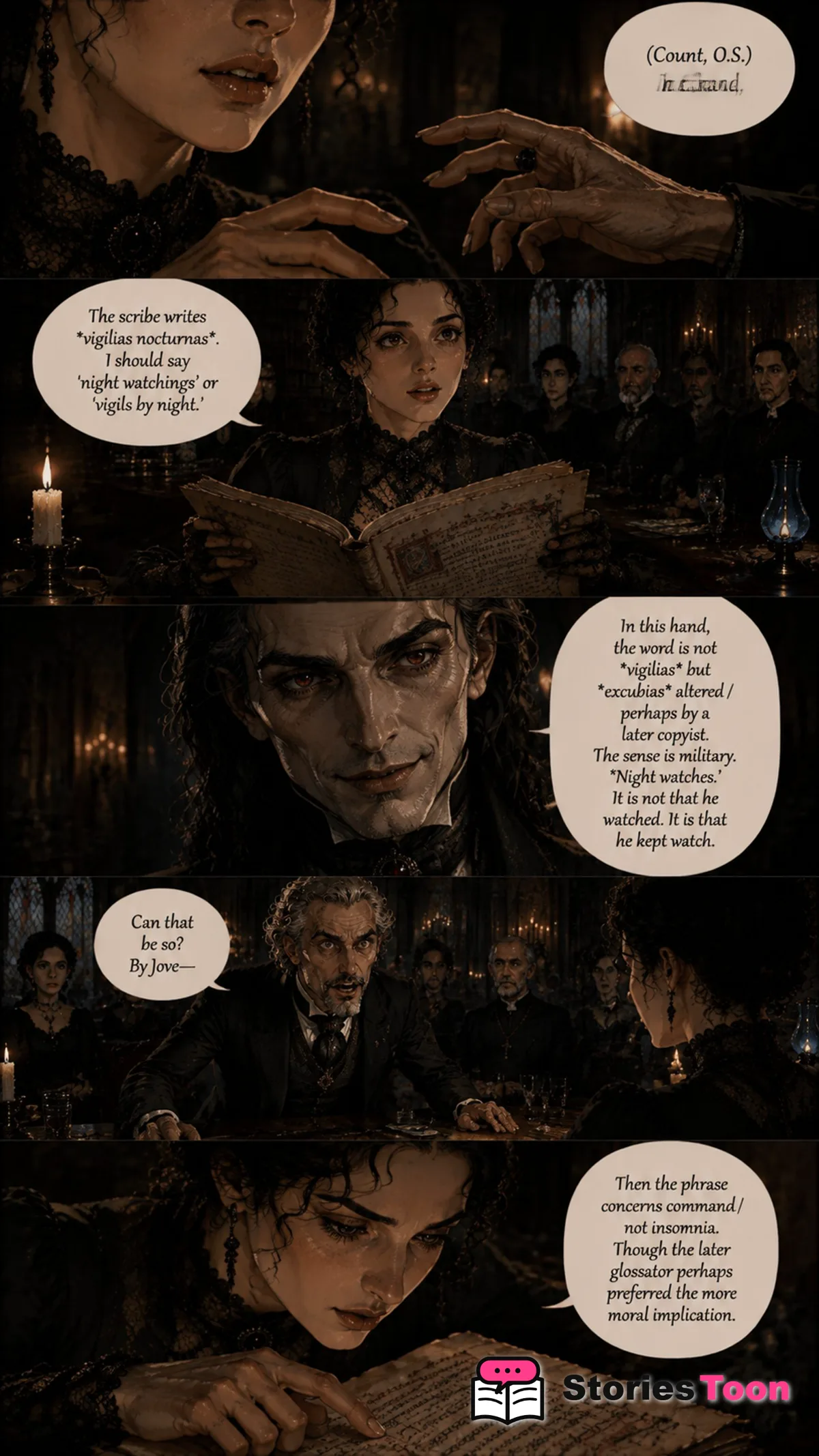
A more crowded, dramatic setting changes the mood without making Mina or Count Dracula interchangeable with the supporting cast.
Keep the world consistent too
Character continuity is easier to believe when the surrounding world follows the same visual logic. Crimson Vow repeatedly returns to black Victorian clothing, carved wood, old books, candlelight, gothic architecture, and muted colors. These recurring elements make new locations feel like parts of the same story rather than unrelated illustrations.
Objects also carry continuity. Letters, manuscripts, jewelry, books, and invitations reappear as story evidence. A recognizable object can connect two pages even when the main character is off-screen.
Human review is part of the result
No generative workflow makes every page perfectly consistent. A long project will contain natural variation, and some pages need correction or another attempt. We review faces, hands, clothing, dialogue, recurring objects, scene order, and the transition into the next page before treating an episode as finished.
This is why AI-assisted, human-directed matters. The tool helps create the pages; the creator decides what belongs in the continuing story.
What 102 pages taught us
- Recognition matters more than exact repetition. A character must remain identifiable across expressions, angles, and lighting.
- A few strong anchors beat a long vague description. Hair, facial structure, silhouette, clothing, and signature details do most of the work.
- Review by chapter, not only at the end. Small drift is easier to correct before it spreads into later pages.
- World continuity supports character continuity. Recurring locations, objects, color choices, and period details keep the series connected.
- Variation is not automatically failure. The visual treatment can evolve while the reader still recognizes the person and the story.
This article uses finished pages from Crimson Vow, a real StoriesToon project. Results can vary, and creators should review every page before publishing.